Categories
News

World Class Access: Samsung Electronics

The ubiquitous smartphone… 

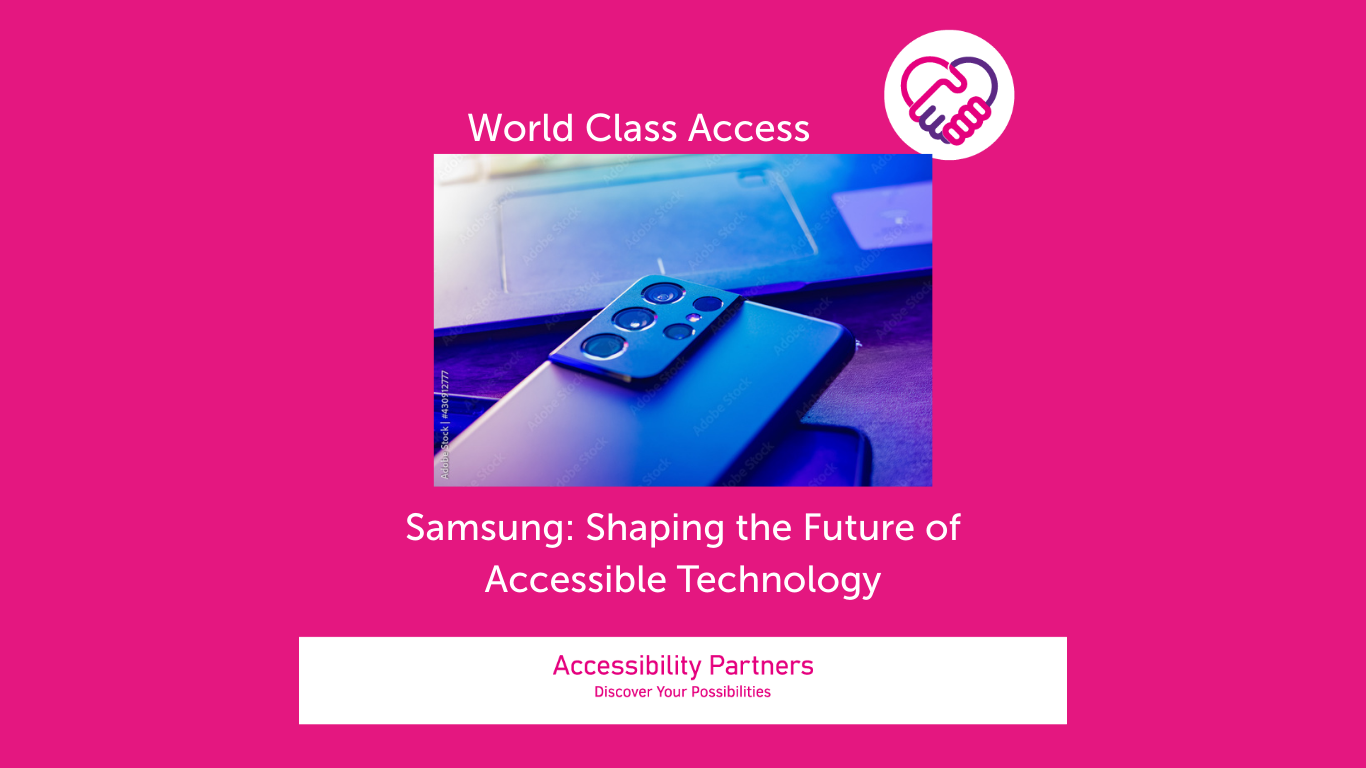
On a hot pink background in white font is the title: World Class Access, accompanied by the Accessibility Partners logo on the right (two clasped hands, one pink and the other purple forming a heart shape. Underneath the title is an image of a smartphone, screenside down on top of another, and the bottom of a laptop in view on a desk. The lighting casts a blue hue over all. Underneath that image, also in white font, are the words: Samsung: Shaping The Future of Accessible Technology. The bottom of the image features a white banner with pink text inside that reads: “Accessibility Partners Discover Your Possibilities”

This week’s #WorldClassAccess features Samsung. The ethos underpins the technology giants’ accessibility work: ‘Creating Better Pathways For All’, with a vision that fosters a lasting commitment, engages communities, and promotes equity. Accessibility is built into all of their products, with assistive technology features encompassing vision, hearing, mobility and cognitive needs:

  • Vision assistive technology includes Talkback, audio subtitling, high-contrast options, and magnification.
  • Hearing assistive technology includes Live transcribing and captioning, sound notifications, and Sign Language Zoom.
  • Mobility assistive technology includes Auto-Open Doors, Universal Switches, and touch settings.
  • Cognitive assistive technology includes Interaction Control and the ability to remember frequently used courses.

All of these are designed to make using your smartphone or household appliances easier. The company also runs a variety of inclusive initiatives to uphold its ethos, one example being their Samsung Family Supporters, where disabled employees and their families give feedback on the usability and accessibility of products, as well as raising awareness through various campaigns and helping make the working environment as inclusive as possible, so everyone feels supported, fulfilled and engaged in their work.

What would make #WorldClassAccess for you? 

Have you seen something or somewhere that you think is an excellent example of inclusion or accessibility? 

Categories
News

World Class Access: IKEA

On a hot pink background in white font is the title: World Class Access, accompanied by the Accessibility Partners logo on the right (two clasped hands, one pink and the other purple forming a heart shape. Underneath the title is an image of an IKEA store, viewed through what is presumably the bars on a trolley. Underneath that image, also in white font are the words: Design for Accessibility. The bottom of the image features a white banner with pink text inside that reads: “Accessibility Partners Discover Your Possibilities”

Let’s talk ‘inkludering’

Since its founding in 1943 in Sweden, IKEA has evolved into a multinational conglomerate offering ready-to-assemble furniture, household goods, and other services. With 483 stores in operation across 63 countries, here’s why we think they are a perfect fit for #WorldClassAccess:

  • Wide Aisles to help ease movement around the store: Did you know that IKEA stores are traditionally designed to follow what it calls “the long, natural way,” counter-clockwise, to encourage people to see the store in its entirety?
  • Assisted Shopping if you need support
  • Changing facilities alongside standard accessible toilets
  • Pay points feature detachable chip and PIN devices with an easy-release mechanism, making them ideal for anyone with mobility issues.
  • In 2021, IKEA established the Digital Inclusive Design, Equity & Accessibility Centre of Expertise, a team dedicated to setting direction, guidelines, and tools, as well as conducting research to continually embed accessibility across their digital strategy.

What would make #WorldClassAccess for you? 

Have you seen something or somewhere that you think is an excellent example of inclusion or accessibility? 

Let us know in the comments, and we’ll do our best to feature it.

Categories
News

World Class Access: RSPB Minsmere

Reconnect with nature… 

On a hot pink background in white font is the title: World Class Access, accompanied by the Accessibility Partners logo on the right (two clasped hands, one pink and the other purple forming a heart shape. Underneath the title is an image of: a wooden boardwalk creating a path through marshland. Underneath that image, also in white font are the words: The Boardwalk to Birdwatch: RSPB Minsmere. The bottom of the image features a white banner with pink text inside that reads: “Accessibility Partners Discover Your Possibilities"

It’s back on UK shores this week for World Class Access as we head to Suffolk to celebrate RSPB Minsmere. This nature reserve is home to some of the UK’s rarest wildlife. It hosts avocets (the iconic bird featured in the organisation’s logo), marsh harriers, black-tailed godwits, and numerous other bird species throughout the year. 

Traditionally, getting up close to nature can be difficult for some, especially those with mobility issues. So, in 2022, Minsmere unveiled a raised boardwalk that stretches 450 metres across marshland and reedbeds to the East Hide, which was also extended, providing an easier opportunity for birdwatching from the area.

The boardwalk is another excellent example of inclusive design, as it benefits everyone, regardless of their access needs or circumstances. Statistics from the RSPB’s 2025 “Big Garden Birdwatch” show that upwards of 595,000 people took part in helping nature during this year’s study, with 12.6 million hours spent watching birds since 1979, when the initiative launched on Blue Peter. With such passion and a desire to understand and protect our wildlife in the face of climate change, ensuring your design is inclusive will not only grow your reach but also open up opportunities to people who may not have had them before. 

What would make World Class Access for you? 

Have you seen something or somewhere that you think is an excellent example of inclusion or accessibility?
Categories
News

World Class Access: Metro de São Paolo, Brazil

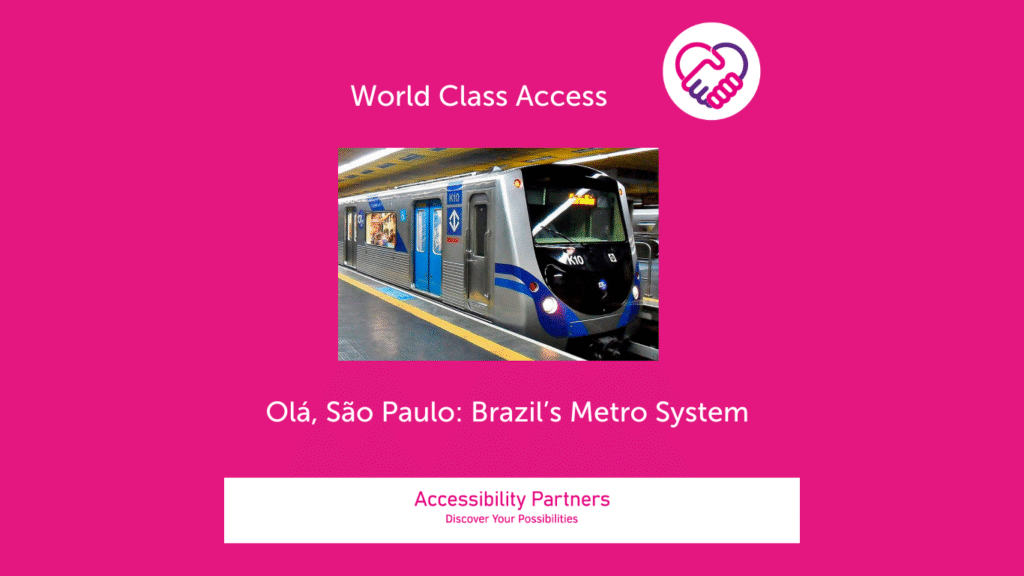
We’re off to the most populous city in the Western and Southern Hemispheres for this World Class Access: São Paulo. And we’re here to highlight its Metro System.

On a hot pink background in white font is the title: World Class Access, accompanied by the Accessibility Partners logo on the right (two clasped hands, one pink and the other purple forming a heart shape. Underneath the title is an image of a silver and blue train on a metro line. Underneath that image, also in white font are the words: Olá, São Paulo: Brazil's Metro. The bottom of the image features a white banner with pink text inside that reads: “Accessibility Partners Discover Your Possibilities”

Considered the most modern in Latin America, the system was the first to install platform screen doors and implement communications-based train control, with some lines being fully automated. Since its operation began in 1974, accessibility has been an integral component of the service, with facilities that include preferential service (being able to buy tickets or enter blockades without queuing, entitlement to the designated preferential seats on trains, and elevator use), staff are fully trained to assist and operate equipment, and comprehensive braille signage, with guide dogs welcome. 

As part of their commitment to inclusive service, staff are regularly trained and requalified to ensure a consistent quality of service and run educational awareness campaigns promoting respect for individuals with disabilities.

The Metro is part of the city’s rapid transit system, which also encompasses the Via Mobilidade, Via Quatro, and São Paulo Metropolitan Trains Company. All four combine to establish the largest metropolitan rail network in Latin America, with statistics from 2024 showing that the metro alone serves around 5.5 million daily commuters. 

What would make #WorldClassAccess for you? 

Have you seen something or somewhere that you think is an excellent example of inclusion or accessibility? 

Categories
News

World Class Access: The Walt Disney Company

Ready for a white-knuckle ride? 

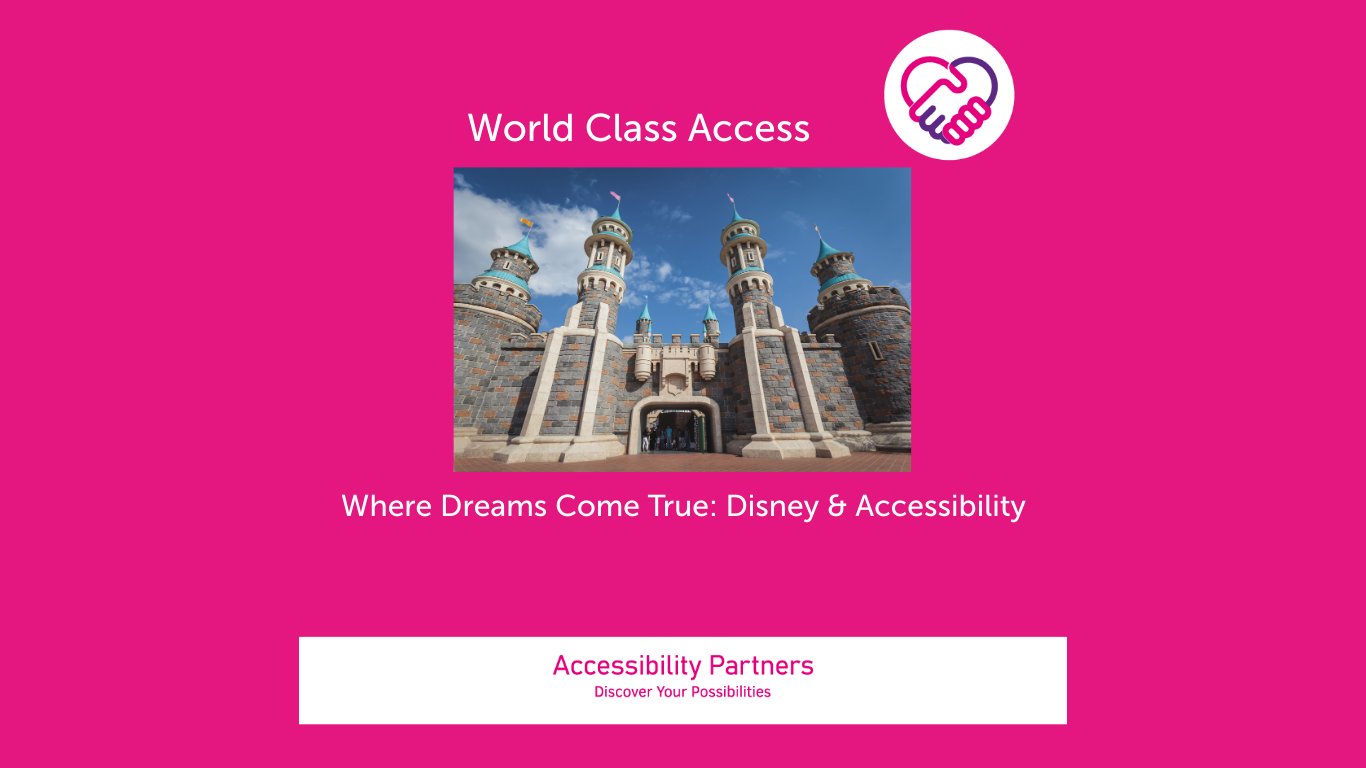
On a hot pink background in white font is the title: World Class Access, accompanied by the Accessibility Partners logo on the right (two clasped hands, one pink and the other purple forming a heart shape. Underneath the title is an image of a castle, evocative of the iconic Disney castle! It has stone-brick textures with multiple towers and turrets, each turret is topped with colourful flags. The castle’s centrepiece is a large arched entrance, inviting viewers in. Underneath that image, also in white font are the words: Where Dreams Come True: Disney & Accessibility The bottom of the image features a white banner with pink text inside that reads: “Accessibility Partners Discover Your Possibilities”

This week’s World Class Access sees us focusing on the Disney empire! A global mass media and entertainment conglomerate, Disney currently operates twelve theme parks located across six resort campuses in four countries, including the USA, France, and China. Last year, the revenue generated from the parks alone was nearly $34.2 billion.

Guests with disabilities are welcome at the park, and they have a wealth of facilities available to ensure your visit is as magical as possible, whatever your needs.

For guests with mobility issues, designated load and unload zones are available for attractions, as well as wheelchair-accessible ride vehicles. Measures are in place to ensure queuing is as comfortable as possible, including provisions for accessing shorter queues where possible. Neurodivergent guests have access to designated “take break areas” that are quieter should they need to decompress, as well as sensory guidance for the experiences at the parks, including scents, lighting effects and attraction speeds.

Assistive technology like sign language interpretation, assistive listening, handheld captioning, audio description, portable tactile maps and stationary braille maps for those with low vision and hearing loss. 

Many of the available facilities can also benefit those without specific disabilities, underscoring the enduring value of inclusive design.

Planning and navigating a trip to a new destination with accessibility needs can feel overwhelming; Disney’s frontline “Cast Members” are trained to support all their guests, with a particular specialisation in neurodiversity. To ensure your visit is the best it can be, our staff can assist you in booking the right hotels and selecting suitable experiences so you know what to expect when planning your holiday. 

What would make World Class Access for you? 

Have you seen something or somewhere that you think is an excellent example of inclusion or accessibility?